Explaining Domestic Violence: An Overview of the Offence, Penalties and Remedies

Explaining Domestic Violence: An Overview of the Offence, Penalties and Remedies
Share this :

Domestic violence is a serious but often hidden issue across Singapore. Whilst we are widely regarded as one of the safest countries in the world, not every home is a safe space. Many victims suffer in silence, held back by fear, shame, or because they lack understanding of their legal rights and protections.

Hence, this article seeks to explain how domestic violence is governed in Singapore, including who is protected, what actions are criminalized, as well as to introduce the legal measures in place which can help to support and protect victims. By increasing public awareness, we hope to empower victims to seek help and to encourage everyone to support those around them who may be at risk.  

What Is Domestic Violence?

According to section 58B of the Women’s Charter 1961 (2020 Rev Ed) (the “Charter”), domestic violence occurs when a family member of the victim “commits physical, sexual, or emotional or psychological abuse” against the victim.

Importantly, section 58B(5) of the Charter makes clear that violence and abuse can be a one-off incident or as a pattern of behaviour. There is also no requirement for the abuse in question to be directed at the victim. It is sufficient if the abuse was capable of being seen, heard, or otherwise  perceived (directly or indirectly) by the victim. This is clearly demonstrated in Illustration (a) of the Charter which states: “X spreads false rumours to third parties about X’s spouse being promiscuous. X’s spouse finds out about the rumours and is distressed. X has committed emotional or psychological abuse against X’s spouse.

Family

Section 58A of the Charter states that family members includes:

  • (a) a spouse or former spouse;
  • (b) a child (including an adopted child or stepchild);
  • (c) parents;
  • (d) in-laws;
  • (e) siblings;
  • (f)  relatives, by blood, marriage, or adoption; and
  • (g) a person who is physically or mentally disabled,  ill, or elderly, and who should be treated as a family member based on their circumstances.

Physical Abuse

Physical abuse refers to acts that result in personal injury or physical pain to the victim. Examples include striking a family member with an object or using physical force in a harmful manner. Additionally, physical abuse encompasses threats of death or bodily harm, as well as wrongful confinement or the unlawful restraint of the victim’s liberty.

However, physical abuse does not include any use of force exercised in self-defence. Hence for instance, if the mother in the earlier example sought to defend herself and the son gets hurt in the process, this would not amount to physical abuse by the mother.

Sexual Abuse

This refers to conduct that forces, or which attempts to force, a person to engage in sexual activity. Crucially, sexual activity is not limited to intercourse – the penetration of a female’s vagina, anus or mouth –, but also includes acts of prostitution – the act of a female offering her body for sexual penetration. Furthermore, since 2020, Singapore law recognises marital rape (where a husband sexually penetrates their wife without her consent), as a form of sexual abuse.

Emotional or Psychological Abuse

This includes conduct which torments, intimidates, harasses or distresses a person, such as that  illustrated in Illustration (a) quoted above; as well as conduct which causes mental harm to a person. Mental harm includes situations wherein the victim grows thoughts of suicide or of  inflicting self-harm.

Talk to someone who can explain your options.

What Is the Criminalisation of Domestic Violence?
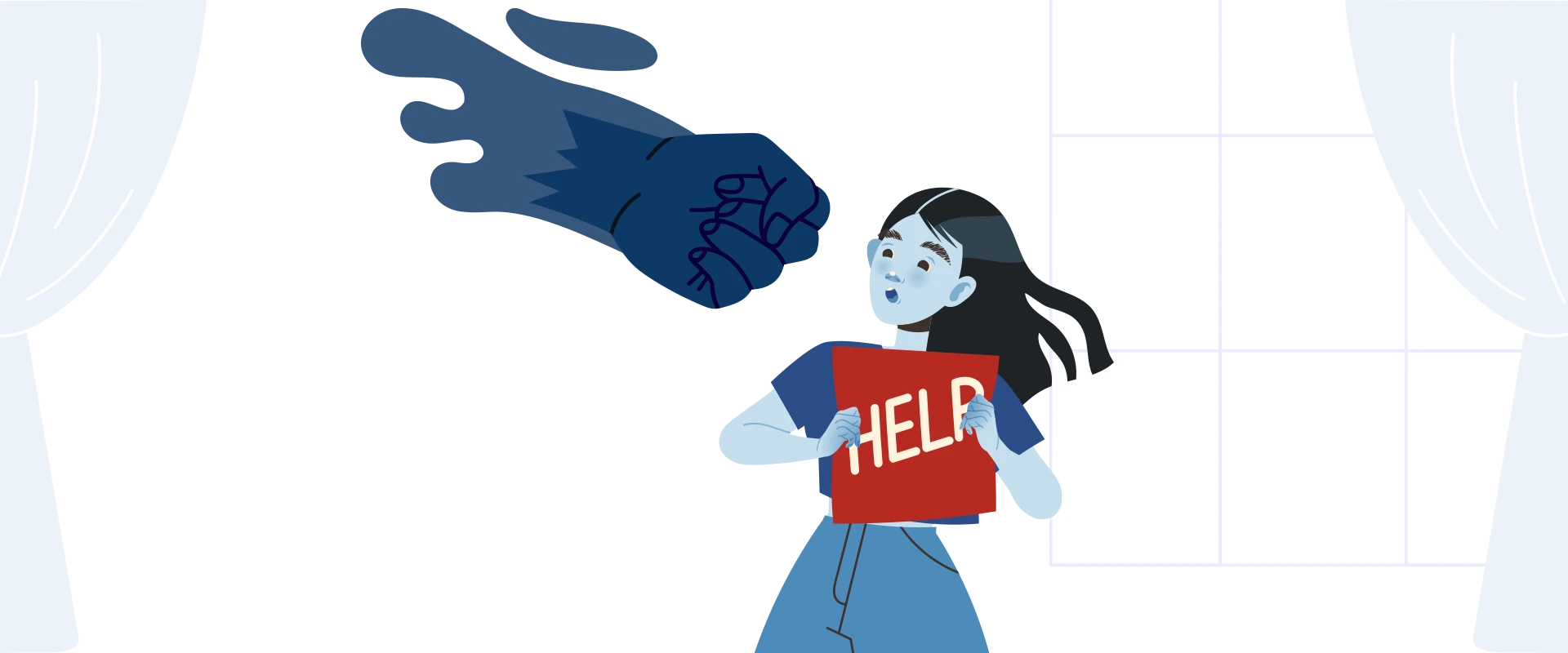
Despite being the main piece of legislation governing domestic violence in Singapore, the Charter does not create a specific criminal offence called “domestic violence.” Instead, various acts  commonly involved in domestic violence—such as physical assault, sexual abuse, and harassment—are criminal offences under the Penal Code 1871 (2020 Rev Ed) (the “Penal Code”) or through the Protection from Harassment Act 2014 (2020 Rev Ed) (the “POHA”). The next part includes a non-exhaustive table of acts of domestic violence which are criminalised under these  acts; as well as their corresponding penalties. Kindly note that each offence comes attached with its own legal requirements for proof; as well as defences which may either reduce an offender’s penalty or acquit them of a charge.

Legislative Section Offence Penalty

Physical Abuse

Sections 321, 323, and 323A of the Penal Code
Voluntarily Causing Hurt
The offender will face imprisonment for a term of not more than 3 years, a fine not more than $5,000, or with both.

Without Intention
If the offender did not intend to cause grievous hurt, but the harm inflicted turned out to be grievous, the offender will face imprisonment for a term of not more than 5 years, a fine not more than $10,000 or with both.
Sections 324 and 334 of the Penal Code
Voluntarily Causing Hurt with Dangerous Weapons (e.g., knives) or Means (e.g., fire)
The offender will face imprisonment for a term of not more than 7 years, a fine, caning, or any combination of the 3.
Sections 322 and 325 of the Penal Code
Voluntarily Causing Grievous Hurt
The offender will face imprisonment for a term of not more than 10 years, a fine, caning, or any combination of the 3.
Sections 326 and 335 of the Penal Code
Voluntarily Causing Grievous Hurt with Dangerous Weapons or Means
The offender will either face imprisonment for life along with caning; or imprisonment for a term of not more than 15 years along with a fine.
Sections 339 and 341 of the Penal Code
Wrongful Restraint
The offender will face imprisonment for a term of not more than a month, a fine or with both.
Sections 340 and 342 of the Penal Code
Wrongful Confinement
The offender will face imprisonment for a term of not more than 3 years, a fine, or with both.

Death

Sections 299 and 304 of the Penal Code
Culpable Homicide
The offender will either face imprisonment for life along with caning; or imprisonment for a term of not more than 20 years along with a fine or caning.
Sections 300 and 302 of the Penal Code
Murder
The offender will either be punished with death; or imprisonment for life along with caning.
Section 304A of the Penal Code
Death by Rash Act
The offender will face imprisonment for a term of not more than 5 years, a fine, or with both.
Section 304A of the Penal Code
Death by Negligent Act
The offender will face imprisonment for a term of not more than 2 years, a fine, or with both.
Section 304B of the Penal Code
Death of a child below 14 or a vulnerable person by sustained abuse
The offender will face imprisonment for a term of not more than 20 years, a fine, caning, or any combination of the 3.
Section 304C of the Penal Code
Causing or allowing death of a child below 14 or of a vulnerable person in the same household

Sexual Abuse

Section 375 of the Penal Code
Rape
The offender will face imprisonment for a term of not less than 8 years but not more than 20 years; as well as caning of no less than 12 strokes.
Section 376 of the Penal Code
Sexual Assault involving Penetration
Section 376A of the Penal Code
Sexual Penetration of a minor below 16 (even with consent)
The offender will face imprisonment for a term of not more than 20 years, a fine, caning, or any combination of the 3
Section 376AA of the Penal Code
Exploitation Sexual Penetration of a minor above 16 but below 18
The offender will face imprisonment for a term of not more than 15 years, a fine, caning, or any combination of the 3

Emotional or Psychological Abuse

Section 3 of the POHA
Intentionally causing harassment, alarm or distress
The offender will face imprisonment for a term of not more than 6 months, a fine not more than $5,000, or both.
Section 4 of the POHA
Causing harassment, alarm or distress
The offender will face a fine not more than $5,000

What Are the Legal Remedies for Domestic Violence?
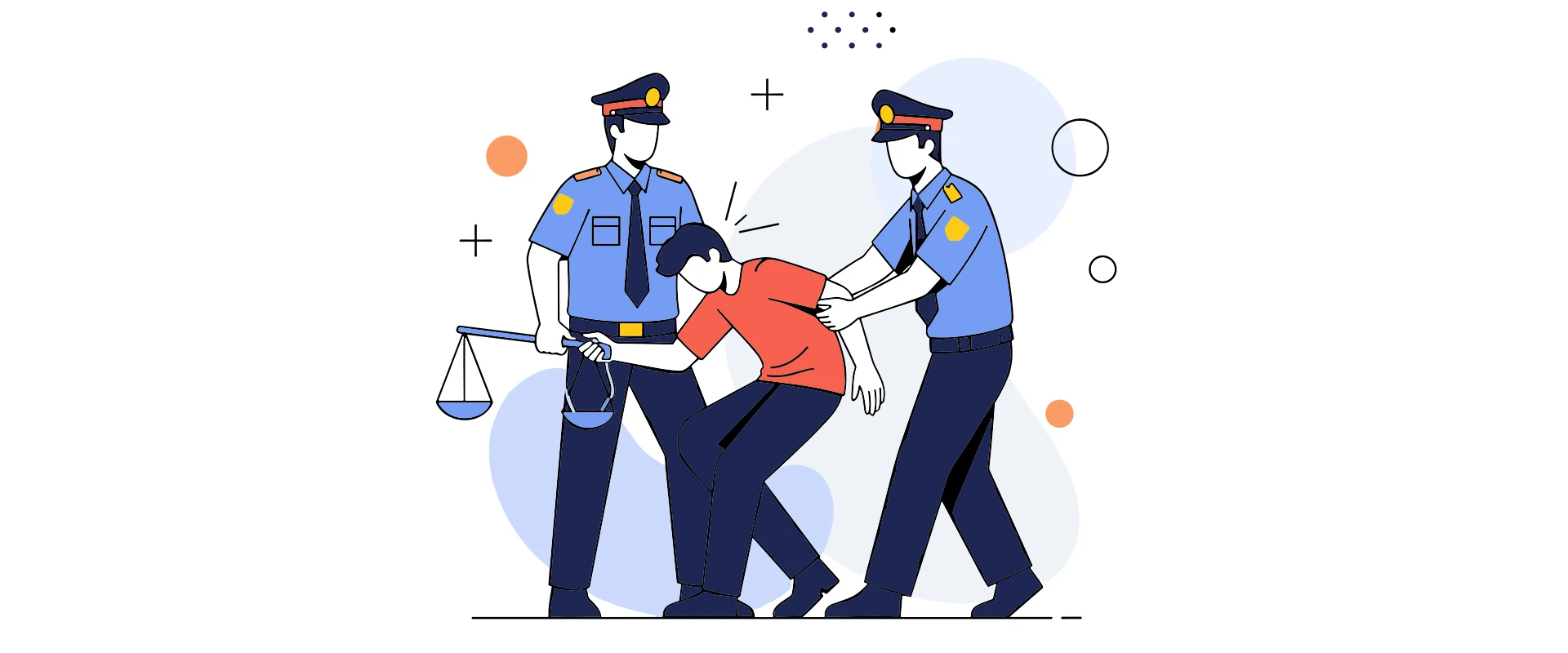
In addition to criminalising various forms of domestic violence, Singapore’s legal framework also introduces personal protection orders (PPOs). PPOs are designed to protect victims and to deter future instances of domestic violence. This section briefly outlines the legal requirements for a PPO as well as the various supplementary orders that can be obtained to make a PPO more effective.

General Requirements: PPO

Generally, a victim must be above 18 to apply for a personal protection order. If the victim is under 18, a parent, guardian, or other eligible family member may apply on their behalf. Furthermore, personal protection orders can only be obtained against family members of the victim. “Family members” are as defined above.

To successfully obtain a PPO, the applicant must prove two things:

  • (1) that a family member has  committed, or is likely to commit, family violence – as is defined in part I above –; and
  • (2) that the order is necessary for the victim’s protection. Once granted, a PPO typically remains in force indefinitely, unless a specific duration is stated, or if it is later varied or revoked by the court.

General Requirements: Supplementary Orders

Supplementary orders will only be awarded if a PPO has already been granted and if the court is satisfied on a balance of probabilities (i.e., it is proven that something is more likely than not) that such an order is necessary for the protection and/or personal safety of the victim. The court will consider issuing a supplementary order in three situations:

  • (1) on its own initiative, as in the case of domestic exclusion or no contact orders;
  • (2) on application by the victim, as in the case of no contact and electronic monitoring orders; and
  • (3) on application by a protector, such as when seeking a removal order. Protectors are appointed by the Director-General of Social Welfare in  Singapore.

Domestic Exclusion Order

A domestic exclusion order grants the victim exclusive occupancy of their home by excluding the  abuser from the victim’s home. This type of order is particularly useful when the abuser is the owner of or has financial interest in the victim’s place of residence. A domestic exclusion order also lasts indefinitely unless otherwise specified, varied, or revoked.

Stay Away Order

A stay away order prohibits an abuser from entering and remaining in particular areas such as the victim’s home; as well as places the victim frequents (e.g., their work and school). A stay away order also lasts indefinitely unless otherwise specified, varied, or revoked.

No Contact Order

A no contact order prohibits an abuser from visiting or communicating with the victim. It also lasts indefinitely unless otherwise specified, varied, or revoked.

Electronic Monitoring Order

An electronic monitoring order directs a prescribed person to put in place one or more prescribed electronic monitoring arrangements to secure the electronic monitoring of the abuser’s whereabouts. For example, the abuser may be required to wear an electronic ankle tag or have their phone location monitored in real time by the police. Unlike supplementary orders, an electronic monitoring order will only last for a specified period. This order is typically imposed in higher-risk cases.

Removal Order

A removal order empowers a protector to remove the victim from their place of residence for their safety. Such orders are particularly useful when the victim may not fully recognize or acknowledge the abuse they are experiencing. Notably, removal orders apply only to individuals who are at  least 18 years old and who do not fall within the legal definition of a vulnerable adult.

Removal orders are also supplemented by care and supervision orders. A care order places the victim under the care of an individual or organization deemed suitable by the protector, for a specified period. Meanwhile, a supervision order places the victim under the oversight of the protector, or another person appointed by the court, for a specified period.

Additionally, if necessary for the victim’s protection and personal safety, the court may issue further orders prohibiting the victim from returning to their home, and from contacting or visiting the abuser.

Counselling Order

A counselling order may require the abuser, the victim, the victim’s children, or any variation of the three, to attend counselling or other programmes as directed by a protector. A counselling order will last for a specified period of no longer than 36 months.

Mandatory Treatment Order

A mandatory treatment order requires the abuser to undergo psychiatric treatment for a specified period of no longer than 36 months. The court may impose a mandatory treatment order if it is clinically proven that the abuser is suffering from a psychiatric condition; that the condition contributed to the abuser’s abusive behaviour; that the condition is treatable; and that the abuser is suitable for treatment.

Enforcement of Orders

A person who fails to comply with a PPO could face a fine not exceeding $10,000, imprisonment for a term of not more than 18 months, or both. However, a person who fails to adhere to a mandatory treatment or counselling orders will be liable to a fine not exceeding $2,000.


Disclaimer

This article is intended for general informational purposes only and does not constitute legal advice. While every effort has been made to ensure the accuracy and relevance of the  information provided, readers are encouraged to consult a qualified legal professional for advice tailored to their specific circumstances. The content reflects the legal position in Singapore as of the time of writing and may be subject to changes in legislation or legal  interpretation.

Justice is a common cause.

Justice is a common cause.

Newsletter Form (#3)

Get Updates on Legal Rights and Remedies


Share this :