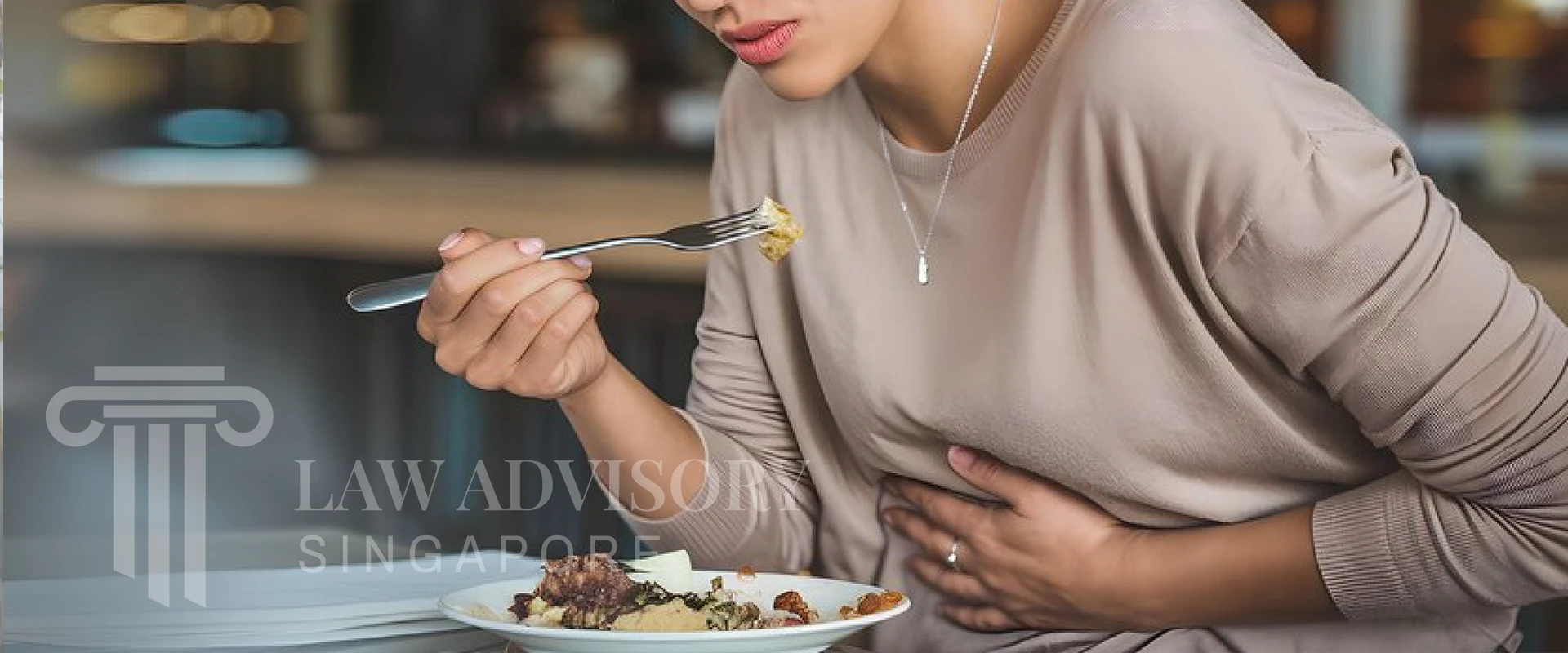
This article examines when food poisoning becomes legally actionable in Singapore – outlining the main factors to consider, common causes of action and applicable laws. It also addresses emerging issues in the context of food delivery services and home-based food businesses which includes practical advice on minimising risk and safeguarding legal rights.
Food poisoning does not automatically give rise to a legal claim in Singapore. Regulatory or criminal enforcement by Singapore Food Agency (“SFA”) or other authorities can proceed independently of any private lawsuit. Conversely, a regulatory finding is not a substitute for civil proof of causation and the food business. If symptoms are severe, in addition to reporting the matter, legal claims may be available under negligence, strict product liability and breach of contract. Practically, anyone suspecting foodborne illness should seek immediate medical attention (and request relevant tests), preserve the suspected food and packaging, keep receipts and photos, record witnesses, and report the incident to SFA via its online feedback form
What is the Legal Framework Governing Food Poisoning Claims?
Food poisoning cases are generally governed by the:
- Sale of Food Act 1973 (“SFA 1973”);
- Environmental Public Health Act 1987 (“EPHA”); and
- Environmental Public Health (Food Hygiene) Regulations (“EPHR”).
These laws ensure that food sold to the public is safe and suitable for consumption, protect public health and prevent misleading practices so that consumers can make informed choices.
SFA 1973
Sections 11 to 19 of the SFA 1973, which govern the sale of food, are particularly relevant in a food poisoning case. If the claim is successful, first-time offenders may face a maximum fine of S$5,000 while repeat offenders can be fined up to S$10,000 and/or face imprisonment for up to three months. For example, certain SFA offences have been shown in enforcement cases to carry maximum fines in the low single-digit thousands for first offences and higher penalties for repeat offences (specific maximums depend on the particular section charged and recent amendments/case law). These regulatory penalties operate separately from any civil damages claim that an injured consumer may pursue.
EPHA
Section 40 of the Environmental Public Health Act prohibits possession for sale of food that is unsound or unfit for human consumption. Contraventions are regulatory/criminal offences. Enforcement outcomes may include fines and imprisonment (reported maximums for offences under this Part include substantially higher fines for repeat offenders), but those penalties are separate from civil compensation claims brought by affected consumers. If the claim is successful, first-time offenders may be fined up to S$10,000 while repeat offenders may be fined up to S$20,000 and/or imprisoned for up to three months.EPHR
Regulation 26 EPHR requires licensed premises to be properly maintained. Breaching this regulation will result in a fine of up to S$2,000, with an additional S$100 for each day the offence continues. Note that the business owner may also be held liable for their employees’ actions unless they can prove the offence occurred without their knowledge and that all reasonable precautions were taken.
When Does Food Poisoning Become A Legal Concern?
This section will cover how the effects of food poisoning are evaluated and the avenues available for seeking compensation.
Step 1: Assessing the Effects
Consider the severity of the symptoms and the overall impact of food poisoning, based on factors such as:
- the degree of physical pain and suffering endured;
- medical expenses incurred;
- other out-of-pocket expenses;
- loss of income arising from an inability to work; and
- emotional distress (where appropriate).
Step 2: Reporting Mild Cases
Where the illness is mild and resolves within a few days without medical treatment, it is likely more practical to report the matter to SFA via its online feedback form and notify the business involved.
Reporting the Matter to SFA
After a report is made, SFA is likely to investigate and issue directives as needed. This approach was seen in the mass food poisoning incident at ByteDance’s Singapore office involving Yunhaiyao, where 171 individuals fell ill. SFA required the disposal of food, thorough cleaning of its premises, re-certification of food handlers and suspended the business until these measures were completed.
SFA commonly investigates reported incidents and can require remedial steps (eg. food disposal, cleaning, recertification and temporary suspension of operations) and may bring prosecutions.
A high-profile instance was the mass gastroenteritis incident reported at ByteDance’s Singapore office (media reports variously recorded over 100–170 affected persons). SFA and MOH investigated, and enforcement action (including suspension of certain kitchens and fines against caterers) followed. In some publicised outbreaks courts have imposed fines for hygiene offences while investigations have not always established a definitive causal link to a specific food item. This example shows regulators can and will use both administrative and prosecutorial tools while civil causation remains a separate evidential issue.
SFA may also, at its discretion, take legal action against any offenders.
Reporting the Matter to the Business Involved
Notifying the business involved allows it to address the food poisoning incident internally, such as issuing refunds, warning the employee(s) involved and reinforcing hygiene practices.
Step 3: Considering Legal Action
Where the severity of the illness and the resulting losses justify legal action, the most common causes of action are negligence, strict product liability and breach of contract.
Negligence
To make a successful claim for negligence, four elements must be established – duty of care, breach of duty, causation and damages. In the context of food poisoning, this means that a food business owes customers a duty to serve food that is safe and suitable for human consumption. Where this duty is breached and the customer suffers food poisoning as a result, the food business may be liable for negligence. A successful negligence claim requires proof that the food served caused the illness, after which the burden may shift to the food business to show that the harm did not arise from its negligence. Accordingly, it is advisable to isolate the source of the food poisoning with assistance from a medical professional and to identify the contaminated food and its source. Proper documentation is crucial as evidence plays a key role in supporting claims for food poisoning.
Strict Product Liability
Singapore does not have a single statutory regime of general “strict product liability” comparable to some other jurisdictions. Product-related claims are typically pursued under negligence and contract principles, and consumer remedies can be available under the Consumer Protection (Fair Trading) Act 2003. Separately, the Sale of Food Act 1973 contains a deeming provision (s.26) that treats the importer, packer and/or manufacturer named on an unopened package as responsible for specified offences. This is a regulatory device that can broaden enforcement targets but does not itself create a standalone civil strict-liability cause of action. Strict product liability allows liability to arise where unsafe or unsuitable food causes food poisoning, without the need to prove negligence. It is generally sufficient to show that the food was unsafe or unsuitable for human consumption and that it caused harm. Liability may therefore extend to multiple parties across the food distribution chain.
Section 26 SFA 1973 reinforces this strict liability approach by deeming the importer, packer or manufacturer named on an unopened package to be responsible for breaches of food safety, even if they did not directly sell the food. However, it is important to note that section 26 is a deeming provision that must be read jointly with an underlying offence under SFA 1973.
Breach of Contract
A breach of contract arises when it is shown that the food provided was unsafe or unsuitable for human consumption under the SFA 1973. A successful claim may entitle the individual to compensation, including medical expenses and legal costs.
How Do Food Safety Laws Apply in Practice?
With the rising trend of food delivery and home-based food businesses, this section will outline key considerations in such cases and offer practical guidance on the precautions needed to protect legal rights when pursuing food poisoning claims.
Food Delivery Services
Contamination can occur after food leaves the restaurant, making it important to consider the roles of both riders and delivery companies. Riders must maintain good personal hygiene and use clean, well-maintained equipment to prevent contamination, while delivery companies should provide clear guidelines, such as using thermal bags to maintain safe food temperatures and keeping allergenic foods separate.
In cases where consumption of delivered food leads to illness, the issue should be reported on the delivery platform under the “food was unsafe for consumption” option (or words to that effect). Detailed information should be submitted within 12 hours of delivery, including the date and time, restaurant’s name, food consumed and photographs of the contaminated items. Evidence of poor hygiene, improper storage of perishable ingredients or foreign objects may strengthen the basis for food poisoning claims and support potential legal action.
If legal action is pursued, it is advisable to bring it against both the rider and the delivery company. Delivery companies may be liable if their acts or omissions foreseeably result in food that is unsafe or unsuitable for human consumption, giving rise to claims for breach of contract or negligence. Even where the rider is primarily at fault, the delivery company may still be jointly liable because its duty of care to ensure food safety is non-delegable.
Home-Based Food Businesses
Currently, home-based food businesses do not require an SFA licence to operate. However, they must still comply with certain food safety requirements to ensure that products are safe and suitable for human consumption, reducing the risk of food poisoning incidents and potential legal claims. Home operators should follow SFA guidance, observe HDB/URA home-business conditions, adopt good records and hygiene practices, and consider formal food-safety training (WSQ Food Safety Course Level 1) to reduce legal and reputational risk.
Practical steps include:
- Enrolling in WSQ FSC Level 1 food safety training;
- Adhering to HDB/URA food safety and hygiene guidelines;
- Keeping up-to-date with best practices; and
- Maintaining records of ingredients, preparation processes and storage conditions.
Even responsible home-based food business owners may face liability if products are unsafe or unsuitable for human consumption. Caution should also be exercised when sharing experiences online, as an unsubstantiated statement may give rise to claims of defamation.
Conclusion
Food poisoning claims in Singapore depend on the severity of illness and extent of losses suffered. Mild cases are usually handled by reporting to SFA or the business, while serious cases may give rise to legal claims. The rise of food delivery and home-based food businesses introduces new risks, emphasising the need for proper hygiene, adherence to regulatory guidelines and thorough documentation. It is therefore essential for both consumers and businesses to take practical precautions to safeguard both health and legal rights.
Disclaimer
This article is intended for general informational purposes only and does not constitute legal advice. While every effort has been made to ensure the accuracy and relevance of the information provided, readers are encouraged to consult a qualified legal professional for advice tailored to their specific circumstances. The content reflects the legal position in Singapore as of the time of writing and may be subject to changes in legislation or legal interpretation.