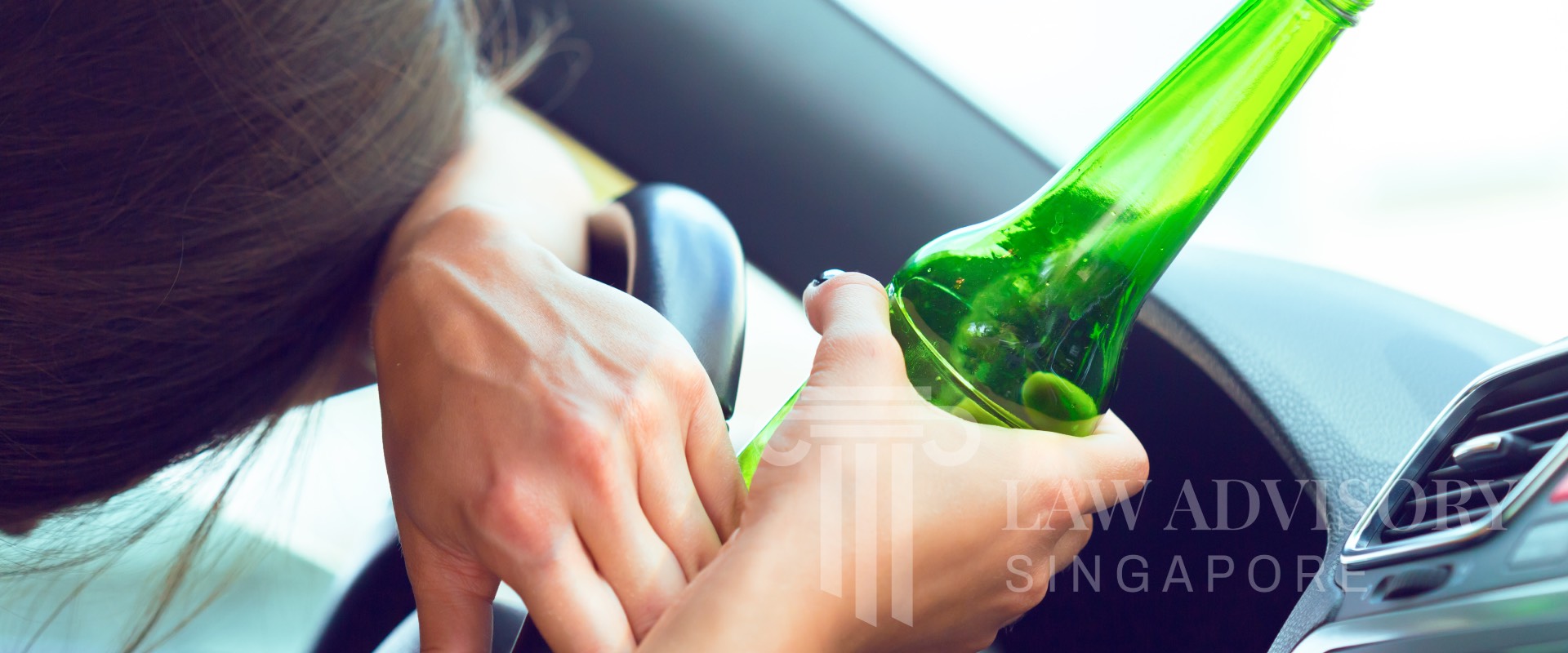
Drunk driving remains one of Singapore’s most pressing and persistent road safety concerns. Despite sustained public awareness campaigns and robust enforcement efforts, the number of drink-driving incidents continues to climb. In 2024 alone, over 1,700 motorists were apprehended for driving under the influence, many involving high-profile cases that underscored the serious risks to both drivers and pedestrians.
Singapore is known for having some of the strictest drink-driving laws in the region, reflecting its zero-tolerance approach to reckless behaviour on the roads. But what exactly does the law consider as “drunk driving”? What blood alcohol limits are legally acceptable? And how do penalties differ between first-time and repeat offenders?
This article provides a comprehensive overview of how Singapore defines and enforces drunk driving offences, including the legal thresholds, sentencing frameworks, and practical consequences for offenders. It also examines how victims are protected and compensated, and considers how Singapore’s laws compare with those in other jurisdictions. Finally, it explores ongoing legal reforms and public safety initiatives aimed at further reducing alcohol-related traffic incidents and making the roads safer for all.
Table of Contents
What Are The Key Terminologies To Understand Drink Driving in Singapore?
Drunk Driving is defined under section 67 of the Road Traffic Act (RTA), whereby an individual operates or attempts to operate a motor vehicle on a road or public place while (i) unfit to drive due to being under the influence of alcohol, a drug, or an intoxicating substance to such an extent that they are incapable of having proper control of the vehicle, or (ii) having a Blood Alcohol Concentration (BAC) or Breath Alcohol Concentration (BrAC) that exceeds the prescribed legal limits. The prescribed legal limits in Singapore are 35µg of alcohol/100 ml of breath and 80mg of alcohol/100 ml of blood, which is approximately equivalent to 0.08% BAC.
Blood Alcohol Concentration (BAC) refers to the quantitative measure of the amount of alcohol present in a person’s blood. It is expressed as a percentage or in milligrams per 100 milliliters of blood. BAC is generally considered a more accurate measure of intoxication as it directly reflects the alcohol in the bloodstream.
Breath Alcohol Concentration (BrAC) is the quantitative measure of the amount of alcohol present in a person’s breath. It is typically measured using a breathalyser device and is used to estimate BAC. While less invasive and quicker to obtain than blood samples, BrAC measurements rely on a breath-to-blood ratio conversion, which can have slight variations.
First-time offender is an individual who is convicted of a drunk driving offense under section 67 of the RTA for the first time. Penalties for first-time offenders typically include fines, imprisonment, and driving disqualification, as outlined in the RTA.
Repeat offender refers to an individual who has been previously convicted of a drunk driving offence (or certain other specified serious traffic offenses) and commits another drunk driving offense. Singaporean law imposes significantly harsher penalties, including higher fines, longer imprisonment terms, and extended or lifetime driving disqualifications, for repeat offenders to deter recidivism. The court will consider the number and recency of previous convictions.
Driving Disqualification is a court order that bans an individual from holding or obtaining a driving licence for a specified period, or sometimes for life, following a conviction for certain traffic offenses, including drunk driving. The disqualification period for drunk driving offenses typically commences from the date of conviction or, if a jail term is imposed, from the date of release from prison.
What Are The Penalties For Drunk Driving And Related Road Traffic Offences?
In Singapore, drunk driving is treated as a serious offence under the RTA, reflecting the government’s firm stance on road safety and personal accountability. Under Section 67 of the RTA, first-time offenders face a fine between S$2,000 and S$10,000, imprisonment of up to 12 months, or both, along with a mandatory driving disqualification of at least two years. Repeat offenders face harsher penalties: fines ranging from S$5,000 to S$20,000, mandatory imprisonment of up to two years, and disqualification for at least five years. A third conviction may result in lifetime disqualification from driving.
Section 68 of the RTA addresses individuals who are in charge of a vehicle while intoxicated, even if not actively driving. First-time offenders under this section may be fined S$500 to S$2,000 or imprisoned for up to 3 months. Repeat offenders may face fines up to S$5,000, imprisonment up to 6 months, and possible driving disqualification.
Additional sanctions include:
- Immediate licence suspension by the Traffic Police,
- Forfeiture of the vehicle in serious cases, and
- Financial burdens due to non-coverage by most insurance policies, which exclude claims arising from drunk driving.
If the offender is a minor driving without a valid licence, the penalties become even more severe. Unlicensed driving is a standalone offence. First-time offenders can be fined up to S$10,000 and/or imprisoned for up to 3 years. Repeat offenders risk fines up to S$20,000, imprisonment up to 6 years, and vehicle confiscation. Additionally, under section 3(1) of the the Motor Vehicles (Third-Party Risks and Compensation) Act 1960, it is an offence to drive a vehicle on the road without insurance coverage against third-party risks. Upon conviction, the offender may be fined up to S$1,000 and/or imprisonment for up to 3 months.
In sentencing, courts assess both the harm caused and the culpability of the offender, with aggravating factors, such as high alcohol levels, repeat offences, or endangering others, leading to more severe penalties.
What Are The Penalties For Refusing To Provide A Breath Sample?
In Singapore, failing to give a breath sample when legally asked by a police officer is a grave violation under Section 70(4) of the Road Traffic Act 1961. Such a refusal, lacking a valid justification, is considered as serious as failing the breathalyser test and incurs comparable consequences to those of driving under the influence under Section 67(1) of the Road Traffic Act 1961. For a first offence, there is a penalty between S$1,000 to S$5,000 or up to 6 months’ imprisonment, if there is no reasonable excuse.
What happens if you fail a breathalyser test? For a first violation, offenders may incur a penalty between S$2,000 and S$10,000, face up to 12 months of imprisonment, and receive a compulsory driving ban of at least 2 years. Repeated violators encounter increased penalties of up to S$20,000 and may be sentenced to up to 2 years in jail, in addition to extended durations of driving disqualification.
Though uncommon, a reasonable excuse might consist of an authentic medical issue hindering the ability to provide a sample or incorrect police protocol during the testing process. Nonetheless, courts typically interpret refusal as a means to hinder justice, potentially resulting in more severe penalties.
What Are The Court Sentencing Considerations For Drunk Driving Offenders?
In Singapore, when sentencing individuals for drunk driving, courts assess various factors to establish the suitable punishment, following a framework that weighs the damage done against the offender’s level of responsibility. The severity of harm ranges from “slight” (minor property damage and/or minor physical injury without hospitalization) to “very serious” (loss of limb, sight, hearing, life, or paralysis). Culpability is evaluated considering elements like the alcohol concentration (e.g., low for 35-54µg/100ml breath, high for >70 µg/100ml breath) and the style of driving (e.g. reckless driving conduct).
Additional aggravating elements comprise committing the crime in a residential area or school zone, driving during peak traffic hours, causing an accident, displaying aggressive behavior when arrested, or trying to flee from law enforcement. On the other hand, mitigating factors may include a prompt guilty plea, helping victims, a clean driving history, sincere regret, or driving in response to an emergency.
The main form of evidence comes from breathalyser results. After an initial roadside screening, a more accurate device known as the Breath Evidential Analyser (BEA) is used at the police station to obtain legally admissible results. If a breath sample cannot be provided due to medical reasons or is disputed, the authorities may rely on blood or urine tests instead.
A driver can still be convicted of drunk driving even if their BAC is below the legal limit provided that the prosecution can prove that the driver’s ability to control the vehicle was impaired by alcohol, based on their behaviour, coordination, or responsiveness, this may be sufficient for a conviction.
What Are The Protective Measures To Prevent Drunk Driving?
To avoid driving under the influence, multiple safety measures and recommendations exist in Singapore. The simplest recommendation is to avoid driving after drinking any alcohol. For individuals intending to consume alcohol, organising alternate transportation in advance is essential. Choices encompass using ride-hailing apps such as Grab, reserving a taxi, or opting for professional drive-home valet options. Public transit (buses and trains) provides a secure option as well. The Traffic Police actively support anti-drunk driving initiatives and carry out frequent checkpoints to discourage and identify violators, highlighting the serious legal repercussions and the lasting effects of alcohol-related driving incidents. These initiatives frequently collaborate with food and beverage as well as nightlife venues to advocate for responsible alcohol consumption and endorse safe transportation alternatives. In the end, the best way to prevent drunk driving is to prioritize safety by arranging transportation in advance after consuming alcohol.
Conclusion
In conclusion, drunk driving in Singapore carries severe penalties under the RTA, reflecting the nation’s firm stance against this dangerous offense. Penalties range from hefty fines and imprisonment to license suspensions, disqualification from driving, and even vehicle forfeiture. Refusal to provide a breath sample is treated with the same seriousness as a failed test. Courts meticulously weigh factors like harm caused, culpability, and aggravating circumstances when sentencing. To avoid these dire consequences, and more importantly, to ensure public safety, individuals are strongly advised to pre-plan alternative transportation like ride-hailing services, taxis, or designated drivers after consuming alcohol. This proactive
approach is crucial in preventing accidents and upholding road safety for everyone.
FAQs
Can I lose my job if I am found guilty of drunk driving?
Yes, being convicted of drunk driving in Singapore can lead to the termination of your employment, particularly where the offence is considered misconduct under employment policies. While there is no specific law requiring employers to dismiss an employee solely for a drunk driving conviction, Singapore law allows employers to terminate employment contracts for misconduct. Drunk driving is a serious criminal offence with significant legal consequences. Employers may view such conduct as gross misconduct, especially if it affects your ability to carry out job duties, harms the company’s reputation, or violates its internal code of conduct. Whether a dismissal is justified depends on the employment contract, company policies, and the circumstances of the offence.
Under the Tripartite Guidelines on Fair Employment Practices issued by the Ministry of Manpower (MOM), termination for misconduct must follow a fair inquiry process, which includes:
- Informing the employee of the alleged misconduct;
- Giving the employee an opportunity to respond;
- Ensuring the case is assessed by an impartial party.
If the inquiry finds sufficient grounds, the employer may impose disciplinary action, ranging from a demotion to immediate dismissal without notice. In a notable case, MOM revoked a ONE Pass (a work pass for top global talent) after the holder was convicted of drunk driving, illustrating the potential employment impact, particularly for foreign professionals or senior roles. This reflects the potential immigration and employment consequences for foreign professionals, particularly those in senior or regulated roles.
If you believe you’ve been wrongfully dismissed, you may file a claim with the Tripartite Alliance for Dispute Management (TADM) for resolution.
How long should I wait before driving after drinking alcohol?
The safest and most strongly advised approach in Singapore is simple: if you plan to drink, do not drive. Singapore has some of the strictest drunk driving laws in the region, and the legal alcohol limits are intentionally low: 35µg of alcohol/100 ml of breath, or 80mg of alcohol/100 ml of blood.
Even small amounts of alcohol can impair your judgment, reaction time, coordination, and vision, all of which are critical for safe driving. There is no reliable way to self- assess whether you are fit to drive after drinking. As enforcement is strict and liability
Drivers are advised not to rely on self-judgment. Alcohol affects everyone differently, depending on factors such as: the amount and type of alcohol consumed, the duration over which it was consumed, your body size, gender, metabolism, and whether you had food alongside the alcohol.
On average, the body metabolises alcohol at a rate of about one unit per hour, but this is only a guideline. There is no way to speed up this process, not with coffee, cold showers, or any other method.
Given the harsh penalties for drunk driving, ranging from fines and imprisonment to disqualification from driving, it is always best to use public transport, taxis, ride-hailing services, or appoint a sober driver when alcohol is involved.
Disclaimer
This article is intended for general informational purposes only and does not constitute legal advice. While every effort has been made to ensure the accuracy and relevance of the information provided, readers are encouraged to consult a qualified legal professional for advice tailored to their specific circumstances. The content reflects the legal position in Singapore as of the time of writing and may be subject to changes in legislation or legal interpretation.